
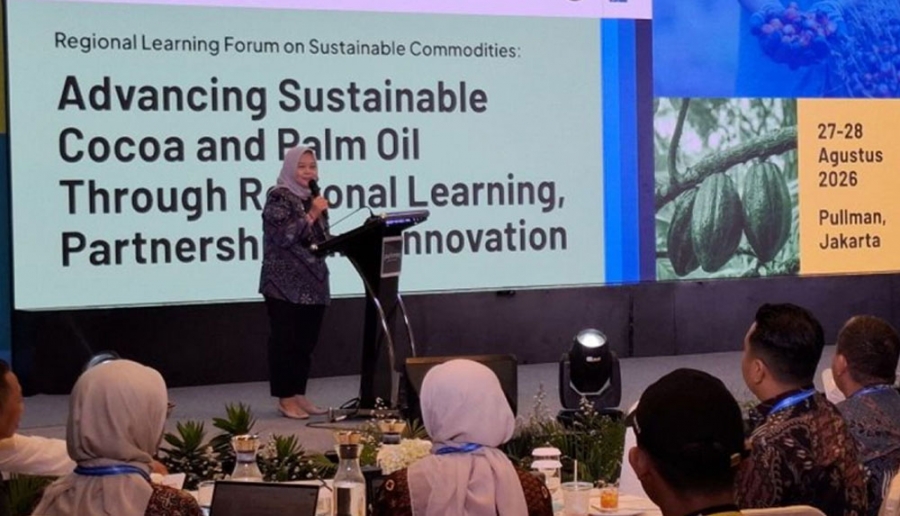
The Coordinating Ministry for Food Affairs is preparing a cocoa plant rejuvenation program to support the national production target of 634,000 tons by 2029 and to strengthen the commodity's sustainability. Nani Hendiarti, the Deputy for Food Affordability and Security Coordination at the ministry, stated that rejuvenation is necessary because many cocoa plants are aging; consequently, the availability of high-quality seedlings is essential for the program's implementation. "In the short term, specifically for cocoa, we have a rejuvenation program because many cocoa plants in various locations are old. We also require good-quality seedlings," Nani said during the Regional Learning Forum on Sustainable Commodities in Jakarta on Thursday. She noted that the government targets cocoa production to reach 634,000 tons by 2029. The strategy encompasses developing the downstream industry, boosting the production of value-added agricultural commodities, and implementing sustainable farming practices, traceability, and conservation efforts. Nani stated that cocoa and palm oil—the two commodities highlighted in the forum—are among the seven agricultural commodities prioritized by the government under its downstreaming agenda.
According to her, downstreaming aims to strengthen domestic value chains, create greater opportunities for farmers, and boost Indonesia's competitiveness in the global market. She added that the development of the cocoa and palm oil sectors also faces challenges related to climate change, biodiversity loss, pressure on natural resources, and evolving global sustainability standards. Consequently, the government is implementing various programs in collaboration with development partners to strengthen commodity value chains through integrated landscape management, institutional strengthening, traceability, market access, financing, and capacity building for smallholder farmers.


