
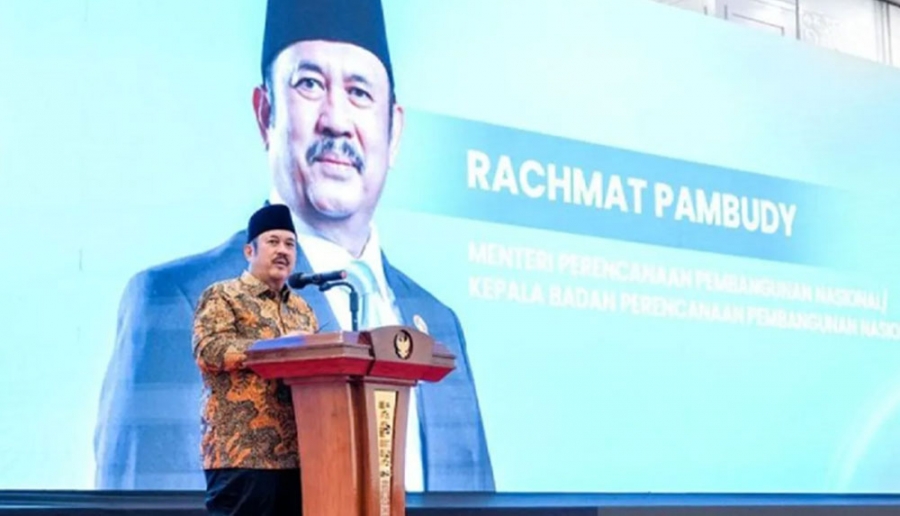
Minister of National Development Planning/Head of the National Development Planning Agency (PPN/Bappenas) Rachmat Pambudy officially opened the 2026 Indonesia's Sustainable Development Goals (SDGs) Award (SAA).
The main theme of the 2026 SAA is "Real Actions to Accelerate SDG Achievement Towards 2030. "Let's make this event a learning space. Let's make this event a space for inspiration, and let's make this event a space for collaboration for the national interest. Together, we move from commitment to implementation, from activities to results, from good practices to broader and more sustainable impacts by saying so," he said at the "Kick-Off Meeting of the 2026 Indonesia's SDGs Action Awards," held virtually in Jakarta on Thursday. He emphasized that accelerating SDG achievement towards 2030 no longer stops with commitments alone, but must be translated into policies, programs, service innovations, business and financing models, and partnerships that produce real change.
The Sustainable Development Goals (SDGs) are a shared agenda that requires collaboration between the central and regional governments, as well as with the business world, universities, civil society organizations, philanthropy, communities, the media, and all relevant stakeholders. Across Indonesia, the Minister of National Development Planning continued, numerous good practices have emerged, including expanded basic services, more sustainable businesses, and innovations from universities that address community needs and provide assistance to vulnerable groups, as well as partnerships that strengthen development impact. "These are the practices we need to recognize, document, expand, and replicate with the necessary modifications," Rachmat said. Through the 2026 SDGs Action Awards (SAA), Bappenas aims to shift the question from simply what has been done to what has changed, to what has resulted in benefits, and how its impact can be expanded.
The Head of Bappenas emphasized that the Indonesia SDGs Action Awards are not a competition to find the program with the largest budget or the most publications, but rather to identify relevant, effective, and inclusive practices with diverse evidence and the potential to accelerate the achievement of the SDGs. "I've invited various ministries and institutions, regional governments, businesspeople, cooperative leaders, micro, small, and medium enterprises, and leaders of universities, civil society organizations, and philanthropic institutions to participate," he said. "Showcase problems that can be solved, using various approaches, and the results achieved for groups, especially those who benefit, and can produce not only sustainable plans but also sustainable results," said the Head of Bappenas.
Generally, SAA 2026 participants will be divided into two categories: how the institution demonstrates its commitment to implementing the SDGs in its governance and mandate within the organization, and outstanding good practices that generate tangible benefits and opportunities for continued expansion. This framework is designed so that awards are not given solely for a single outstanding activity, but also consider the institution's commitment to maintaining the sustainability of its contributions.
Regarding the SAA series timeline, registration begins today in August 2026, and participants will have time to prepare information and documents until mid-September. Then, there will be a monthly review and judging process in September and October, with winners announced and awarded as part of the SDGs Annual Conference (SAC) in November 2026. For this year, the system has been prepared to serve both existing and new participants. Institutions that have participated in SAA can reuse their existing accounts and update their data, while new participants can register through the official SAA portal.


