
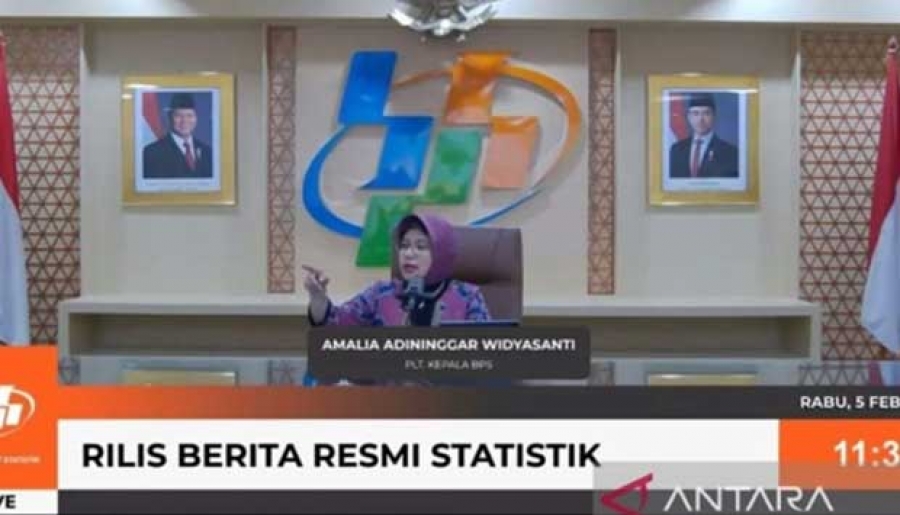
Acting Head of Central Bureau of Statistics (BPS), Amalia Adininggar Widyasanti, highlighted that household consumption remains the primary driver of Indonesia’s economic growth in 2024. This component accounts for 54.04% of total expenditure and has grown by 4.94% cumulatively. The rise in consumption is driven by increased mobility, particularly in the transportation and communication sectors. Additionally, spending on restaurants and hotels has also seen significant growth, fueled by school holidays and major religious celebrations. Another key contributor is Gross Fixed Capital Formation (PMTB), which holds a 29.15% share and has grown by 4.61%, supported by rising foreign and domestic investments.
Exports continue to play a crucial role, contributing 22.18% with a growth rate of 6.51%. Several commodities, including electrical machinery, nickel, and footwear, have experienced both value and volume increases. While some commodities, such as mineral fuels and steel, faced a decline in value, their export volumes remained strong. The tourism sector also saw positive momentum with a rise in international visitors. Government spending contributed 7.73% with a growth of 6.61%, while nonprofit institutions serving households (LNPRT) recorded the highest cumulative growth at 12.48%. Despite imports having a negative contribution of -20.39%, net exports remained positive at IDR 513.7 trillion, reflecting a resilient economic outlook.


